July 21, 2026
Severe weather can roll through your neighborhood with little warning and leave massive destruction behind. High winds and heavy rain combine to wreak havoc on your property. While you might focus first on your roof or windows, the landscaping requires equal attention. Trees often bear the brunt of severe weather systems. Mature branches snap under pressure, and entire root systems fail in saturated soil. Homeowners face significant safety hazards when these giants become unstable. You must assess your yard carefully once the weather clears.
Identifying the difference between minor yard debris and a major hazard takes a careful eye. A few scattered leaves are normal, but larger structural damage poses an immediate threat. You can't wait weeks to address hanging limbs or leaning trunks. Securing professional arborists quickly protects your family from secondary impacts. Understanding what warrants urgent attention is crucial. Let's explore four key indicators that signal you need professional intervention right away.
1. Large Branches Hanging Over Your Roof
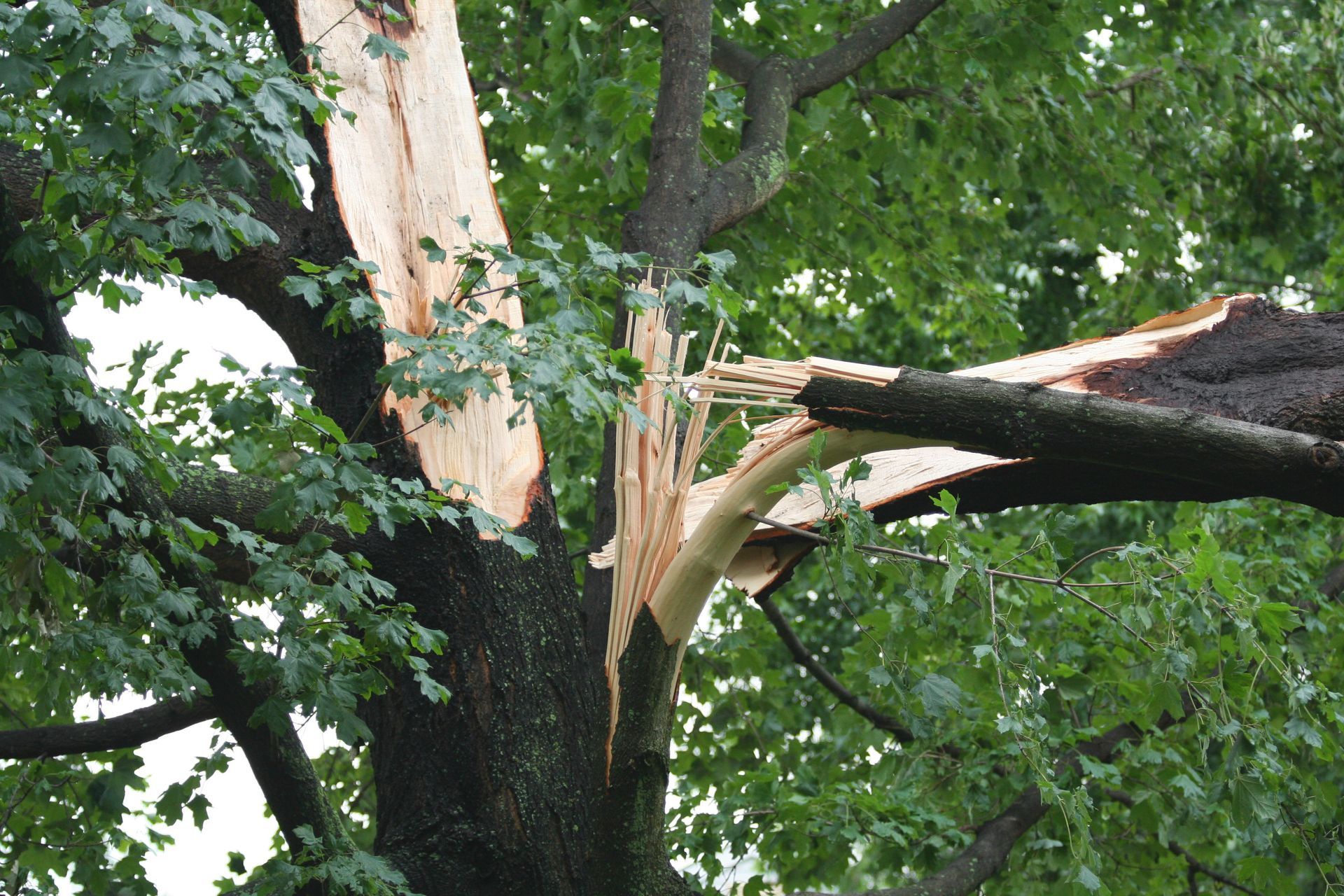
One obvious indicator of danger involves large limbs suspended awkwardly above your home. High winds easily fracture thick branches but leave them tangled in the surrounding canopy. These broken segments become unpredictable hazards hanging by thin strips of bark. The next minor gust of wind could send them crashing down through your shingles. The sheer weight of mature wood creates a catastrophic force upon impact.
The location of the broken branch significantly increases the urgency of the situation. Any limb positioned directly over a bedroom, driveway, or power line requires immediate attention. Assessing the damage from the ground provides enough information to determine the risk level. Don't walk underneath the suspected hazard to get a closer look. A branch that appears stable can shift without warning. Prioritizing safety means maintaining a wide perimeter.
Calling for emergency tree services is the only appropriate response when massive limbs threaten your roof. Specialized equipment allows technicians to safely secure and remove the broken wood without causing additional harm to your property. Attempting a removal with a ladder and a chainsaw usually results in tragic accidents. Leaving the job to trained individuals ensures the hazardous material disappears safely.
2. A Noticeable Lean in the Trunk
Trees naturally grow at slight angles to reach sunlight, but a sudden shift in posture indicates a critical failure underground. Heavy rainfall saturates the soil and turns firm dirt into a loose, muddy mess. When intense wind pushes against the canopy, the root system loses its grip. You might notice the ground heaving or cracking around the base of the trunk. This exposed root plate means the entire structure is failing.
Monitoring the angle of a tilting trunk requires immediate action rather than passive observation. If you notice a distinct slant toward your house or a nearby road, you must act quickly. According to This Old House, if you're deciding whether to remove a tree, there are three main things to look for: signs of decay, a risky location, and structural issues. An abrupt lean combines structural failure with a dangerous location.
Only certified professionals can determine if a leaning structure can be saved or if it needs immediate removal. Following a severe storm, the damage to the root system is often irreversible. Calling for emergency tree services ensures a rapid response before gravity finishes the job. Crews arrive with the necessary equipment to dismantle the hazard piece by piece, preventing the trunk from crushing everything nearby.
3. Deep Cracks Splitting the Main Trunk
Structural integrity relies heavily on a solid, undamaged main trunk. Storms generate immense twisting forces that can split solid wood wide open. You might discover vertical cracks running down the center of the tree or deep fissures where major branch unions meet. Unlike small surface wounds that heal over time, deep splits separate the load-bearing fibers. The weight of the canopy above now rests on a fractured foundation.
Inspecting the bark carefully after bad weather reveals these dangerous splits. Sometimes the damage is obvious and exposes the pale interior wood beneath the rough exterior. Other times, the crack remains subtle and requires a closer inspection from a safe distance. Any deep separation signifies an unstable structure. A split trunk can fail catastrophically and drop half of the canopy onto your lawn.
Dealing with a split trunk involves complex rigging and specialized knowledge. Cables and braces can occasionally save a moderately damaged specimen under normal conditions. However, severe storm damage usually means the structural failure is too advanced for simple repairs. Relying on expert emergency tree services provides a definitive solution to a highly volatile problem. Removing a split trunk early prevents it from breaking apart randomly.
4. Intersections With Power Lines
Electricity and wet wood create a lethal combination after heavy rainfall. High winds frequently blow heavy branches directly into overhead utility lines. Sometimes the impact severs the wires completely and leaves live cables sparking on your lawn. Other times, the branches simply rest against the intact lines. Both scenarios present an extreme danger to anyone in the vicinity. Touching any trunk in contact with a power line can result in electrocution.
You must exercise extreme caution whenever utility lines are involved. Never approach the area or attempt to clear the debris with household tools. Keep your children and pets locked inside the house well away from the danger zone. Your first phone call should be to your local utility company to report the obstructed lines. They must cut the power to the grid before cleanup operations can safely begin.
Once the utility company secures the electrical grid, it'ls likely that you'll still face a massive cleanup project. The tangled mess of burned wood and shattered limbs requires careful extraction. Many utility companies only clear enough debris to restore power. They leave the remainder of the broken wood scattered across your property. At this stage, professional intervention becomes necessary to restore your yard safely.
Securing emergency tree services helps you manage the aftermath of electrical hazards. Expert crews are trained to move around recently deactivated utility zones safely. They will remove the charred limbs and process the heavy wood into manageable pieces. These professionals also check the remaining canopy for hidden damage caused by secondary wind impacts. Their thorough cleanup process ensures your property is completely safe.
Storm damage leaves property owners feeling overwhelmed and anxious about the safety of their homes. Ignoring the warning signs of structural failure will only lead to more significant problems down the road. Contacting emergency tree services immediately mitigates these risks and restores peace of mind. Professional arborists possess the knowledge and equipment necessary to handle the most dangerous situations. They remove the guesswork from yard cleanup and prioritize the safety of everyone involved.
Recovering from severe weather takes time and patience, but taking swift action on hazardous vegetation accelerates the process. Carefully evaluating your yard for hanging branches, leaning trunks, deep cracks, and power line interference is an essential first step. You should prioritize your safety above all else and avoid taking unnecessary risks with heavy debris. Partnering with skilled professionals guarantees a thorough and efficient resolution to storm-related damage.
Contact Wisdom Tree Service LLC right away for emergency tree services to safely resolve these storm hazards on your property.